Humility

Imitate Jesus and Socrates

Benjamin Franklin as interpreted by Andreas Landman
Photo by Mark Arron Smith on Pexels.com

This is the last of the Benjamin Franklin virtues. According to Steve Jones, Benjamin Franklin was asked by his peers to add this virtue because Benjamin Franklin did not have Humility on his list – after all, after achieving the other virtues, could he really want to be humble?
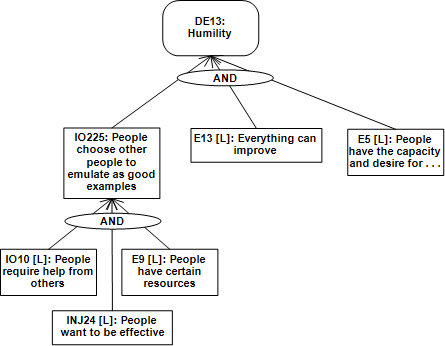
But being humble is not what Benjamin Franklin meant by humility. His point was that since people don’t know everything immediately, they need examples of how to act to be more effective. Whose lead do you take?

In the blogs that follow, I will evaluate the proposed fundamental principles of human effectiveness against some of Stephen Covey’s principles underlying the Seven Habits of Highly Effective People.

Benjamin Franklin’s Virtue: Chastity

Photo by Karolina Grabowska on Pexels.com

Chastity is Benjamin Franklin’s penultimate virtue – depending on who is counting. For Benjamin Franklin, this was his last virtue.

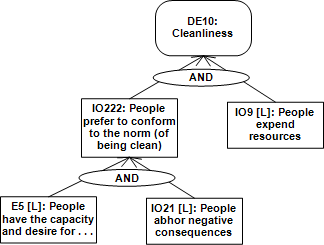
Being effective is limited by the amount of resources one has; hence, one would ideally behave in ways that give a return on investment—likewise, having people who are reactive as resources requires one to act in a way that will not endanger the relationship with those people.


Wanting positive consequences, a good return on effort, and not wanting negative consequences to endanger our relationships, we honour our desire for belonging by living in line with expectations, hence chastity.

Tranquillity

Photo by David Bartus on Pexels.com

Do not sweat the small things or things out of your control.

Benjamin Franklin as interpreted by Andreas A Landman

Everyone has their picture of tranquillity. Some see the sea, others a
babbling river, others a mountain, yet others a library.

Depending on one’s picture of tranquillity, one would have many possible
paths to that tranquillity.

For Benjamin Franklin, it seems, tranquillity was related to focusing on
what he could control and not fretting about what he could not control. Not
fretting sounds tranquil – even if I am far too often sucked into worrying
about what I cannot control.

Our question is whether we can connect the virtue of tranquillity to the
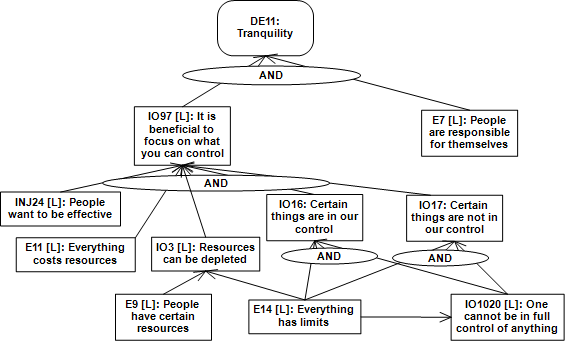
proposed fundamental principles of human effectiveness. The cause-and-effect logic above shows us the link.

(I forego labelling the main steps in the hope that the other examples in my
posts are sufficient to guide you to follow the reasoning.)

Since everything has limits, we can also say that our control of things is
limited, even to the extent that we cannot fully control anything.

If we have limits, including limited control, it follows that there are
certain things we can control and others we cannot.

Further, our resources are limited, so our resources might be depleted if we
attempt to control more than we can. If we want to be effective, we must focus
on what we can control. If we actively focus on what we can control, we can
achieve Franklin’s interpretation of tranquillity.


Moderation

Photo by Ajmal Raw7 on Pexels.com

Avoid extremes – do not make others jealous.

Benjamin Franklin as interpreted by Andreas A Landman

Allow me a quick detour. For those interested in the logical thinking processes more than the fundamental principles, I refer you to The Edge or Reason – you will gain much more insight there.

Back to our path.

We previously showed that everything can potentially have negative consequences, which, combined with the fundamental principle that people have the capacity and desire for various basic needs and emotions, lead to the conclusion that people can be jealous. If we further accept the fundamental principle that people are interconnected, we conclude that moderation is a good option for those who want to be effective.

Justice

Photo by Sora Shimazaki on Pexels.com

Do not harm anyone: either by doing something or not doing what you are supposed to do.

Benjamin Franklin as interpreted by Andreas A Landman

Justice is substantial because justice is one of the capacities or desires we humans have. Often, we feel as though there is no justice in this world. The fact is, like everything else, justice costs resources. If we are not willing to pay the price for justice, we will not have justice. We must then stick to the fundamental principle of being responsible and accept that justice is unavailable because of our choice. Ouch.

Sincerity

Do not be deceiving; think and speak innocently and justly.

Benjamin Franklin as interpreted by Andreas A Landman
Photo by Andres Ayrton on Pexels.com

Today’s cause-and-effect logic is short and intense. If the words we use matter, and we are consistent with ourselves, it is far better to be sincere in what we say and think. If we try to be insincere, we will eventually be caught out with possibly disastrous consequences. Let that sink in.

Resolution

Do what you must and do what you said you would do.

Benjamin Franklin interpreted by Andreas A Landman
Photo by Breakingpic on Pexels.com

Stick to your resolutions! A virtue few admit to not doing. However, if we learn to make only those commitments we intend to keep, we would be more effective.

A: If people are reactive and interconnected and the inside cannot affect the outside without being let out and the outside cannot affect the inside without being let in, then people have a reciprocal relationship with each other.

B: If people require help from each other and People have certain resources, then people ask each other for help.

A and B – C: If people ask for help and people are reciprocal in nature, they offer help.

C-D: If people are consistent with themselves and offer help to others, they will only do what they really intended to do.

D-DE: If people will only do what they really intended to do, and want to be seen as reliable and do not want to be seen us unreliable, they will stick to their resolutions.

Benjamin Franklin Virtue: Industry

Do not waste time – keep busy with something useful, and don’t do what is unnecessary.

Benjamin Franklin as interpreted by Andreas A Landman
Photo by Pixabay on Pexels.com

Wait, there’s more. Today, I add yet another block to our list of block types. Today’s block describes a definition. We have already reached the conclusion that words matter. Words mean different things to different people, therefore, we must use specific definitions to understand the meaning of what we are saying. (Often, you’ll find that you did not know what you were saying either.)

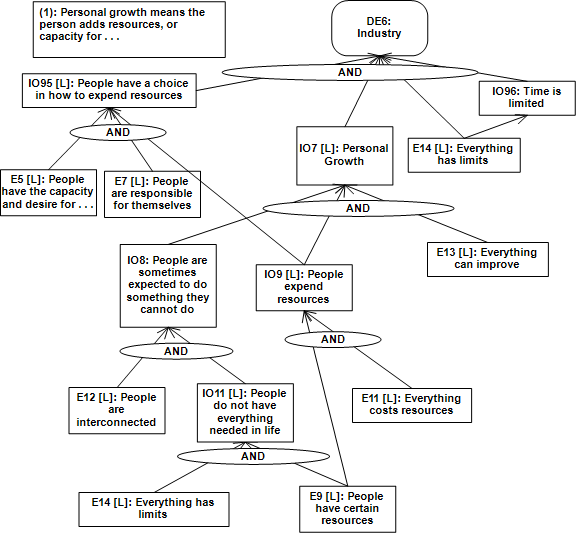
A: If everything has limits and people have certain resources, then people do always have everything needed in life.

A-B: If people are interconnected and do not have everything they need and people are interconnected, then people are sometimes expected to do something they cannot do.

C: If people have certain resources and everything costs resources, then people expend resources.

B and C – D: If people expend resources and everything can be improved, and people are sometimes expected to do something they cannot do, then people invest in personal growth.

C-E: If people expend resources and people have certain capacities and desires and people are responsible for themselves, then people have a choice in how to expend their resources.

D and E: If people have a choice in how to expend resources, and people invest in personal growth, and everything has limits (including time), then people should be industrious in doing something useful.