In my latest picture book (Molecules we Know) I show the molecular structure of everyday molecules, from the feel-good hormone dopamine to hydrochloric acid used in pools. I hope this book will awaken the love for chemistry in someone. At least the molecules will satisfy someone’s curiosity.
The copper-iron and copper-silver interaction are examples of reduction and oxidation reactions.
#Christmas #Science #Chemistry
In the clip, a copper tree turns into a silver covered tree, which looks like a snow covered tree.
For those thinking of replicating the experiment, be prepared to fork out about $ 100.
You can do a much cheaper experiment (less than $ 1). Dip an iron nail into a copper sulphate solution. The iron nail will turn into a copper nail, almost immediately!
The copper-iron and copper-silver interaction are examples of reduction and oxidation reactions. Oxidation and reduction reactions make mirrors possible where silver is deposited on glass and copper is deposited on the silver layer.
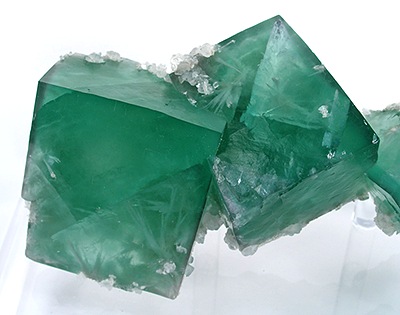
Crystal Garden. Crystals in a glass jam-jar with a string hanging from a pencil over a blue-green liquid (mainly copper sulphate for those who want to know). Later Quartz crystals in the real garden. Eventually, molecular shapes on a computer screen in space filling, ball and stick and stick forms. An old scholar’s fascination with snow crystals. Metal crystals! All these, but the first foremost, lit the chemistry candle in me.
I have attempted to light a similar candle in my kids. They appreciated the sodium-phosphate-crystal-growth kit – the biggest crystal I have ever produced. They were the talk of the school when Edith (my wife) helped them produce the biggest borax crystals in class. My young ones have other loves and they live out their unique identities. Good for them.
My youngest was as fascinated by the molecular diagrams in the Rubber Bible (CRC Handbook of Chemistry and Physics). Looking at the diagrams again, re-awakened my desire to investigate these molecules with molecular modelling software. These models will form the basis of a book of shapes – but much later. My youngest pointed out that the one molecular shape resembles a mouse, then there was the human face, dog, flying balloon and many others. I don’t know whether this is a failed Rorschach test or looking at clouds with imagination. You decide.
I still wish to light the chemistry candle in other young ones. So, I have compiled an elementry (yes, I know a spelling mistake) book: Elementary Science: Alphabet, Numbers, and Shapes (Elementry Science Book 1) (now I got the spelling right). The book shows the alphabet using the elements. J, Q and W are not covered. Yes, tungsten does exist, but I do not want to confuse a child by making them believe that W is pronounced “T”. Counting using alkanes is easy enough to do and molecular shapes cover simple geometries.
So, what am I saying: “See if you can spark the love of your favourite subject in the young ones around you.”




 Green Octahedron Blogging
