Safety Assumptions

We must test our assumptions.


I enjoy a joke as much as the next person. Sometimes, I overthink a joke, though. Case in point.
fue-10-563x1000
Awkward

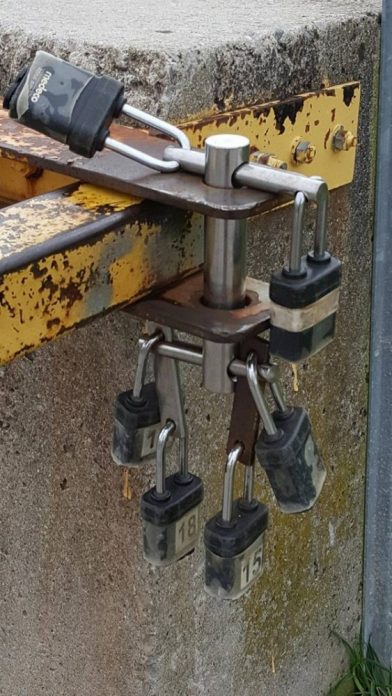
“Awkward” has a page entitled “15 People Are Wayyyyyy Too Overprotective”.  Photo 12 shows a gate locked with six locks. From my perspective, this is not being overprotective. Since at least three of the locks have numbers, I see this set of locks as part of a lock-out procedure. Each person has locked the area with his/her lock to ensure that no-one can enter/leave without them. Locking out is a good safety practice, not being overprotective. My problem is that anyone can remove all the locks by removing any one of the locks; a clear case of not thinking about thinking safety.

Don’t get me wrong, the premise is funny, and there is nothing wrong with having a good laugh. I am using Akward’s different interpretation of the photo to show that we make assumptions.

Assumptions are necessary. Without assumptions, we would need to start from scratch in everything we do. Our level of decision making would reduce to first principles. We would deplete our decision-making energy, halting all progress.

We must remember that the most significant assumption we make is that others know what we know. People are from different backgrounds and have different levels of exposure. Our experiences form our frame of reference for risk assessment. Not discussing a risk from the same frame of reference can lead to someone getting hurt. Assuming everyone has the same frame of reference is not a wise assumption.

We must test our assumptions.

Managers must always make sure that everyone is on the same safety page — especially those who are career starters.

By the way, photo 11 is not funny from a safety perspective, either.
work explained

SAFETY FIRST

Think about thinking about safety!


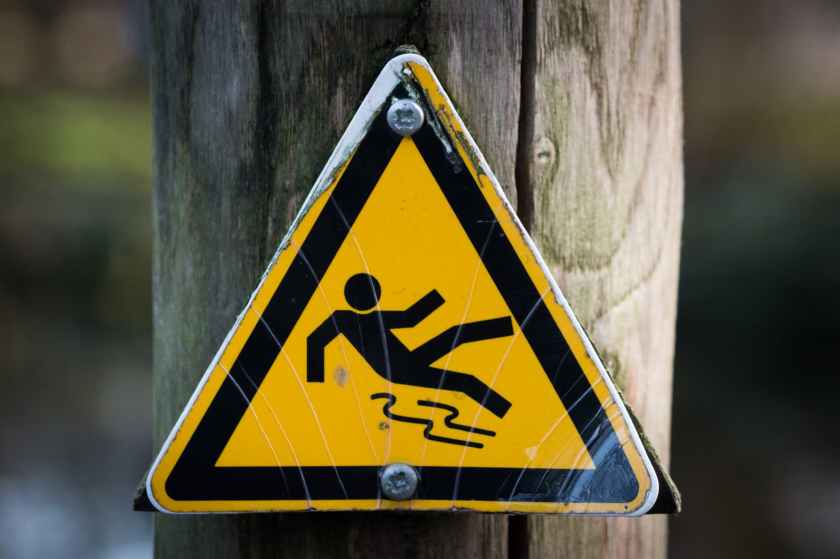
sign slippery wet caution
Photo by Skitterphoto on Pexels.com

Let’s start at the beginning. Safety First.

Yes, I will make a call to action then build up to a sale.

We must all think about safety.

We must think about thinking about safety.

When we instruct to instil safety, we must make sure that people can adhere to the instruction.

For example, “Use three points of contact when using stairs”. First, we must place the instruction on all stair handrails – easy. Second, the stair handrails must be close enough to each other so that a person can hold onto two handrails at a time. Not so easy, as one can see on most wide stairways. Third, the person using the stairs must have both hands free. WOW! How often does this happen? A logical conclusion is that we must provide escalators or lifts. A cheaper alternative is to have everyone use a shoulder bag to carry any objects.

Think about thinking about safety.

Another example will bring us closer to the sale.

Some workplaces have safety representatives. Safety representatives must complete regular safety inspections of the workplace. Two aspects of safety inspection forms/booklets spring to mind. First, the manager and the safety representative must be able to use the questionnaire. When all is well, the form must show that all is well. The form must identify an unsafe behaviour or activity for action.

Second, the inspection form must focus only on behaviours and conditions that are under the manager’s control. The questionnaire should not check compliance with construction regulations. For example, the safety representative does not need to know how many lights there should be but should report lights that don’t work.

Audits by qualified personnel/contractors must focus on infrastructure issues. The company should have addressed infrastructure issues during the building design phase.

Now the sale. I have developed forms that are easy to use and focus on controllable items only. You can order your copy of “I keep Record of Workplace Safety” from Amazon.com.Safety