In my opinion, the secret of passing an exam is getting marks.
Simple, isn’t it.
The other secret is making sure our brain works with us and not against us.
The brain is an energy-hungry organ that prefers doing things quickly and simply. Doing things right is not on the agenda.
Therefore, I suggest the following:
In the test, write down what you know is relevant. This will give you marks if it is correct and relevant. 1/5 is better than 0/5 for a question that you are battling with.
Writing things down also slows you down and gives the brain time to process.
Necessary, do your homework!
When doing your homework, don’t check your answers immediately; allow an hour to pass before checking the answers. You don’t want to train your brain to get instant gratification. You will not have that opportunity during the exam, and your brain will sulk – meaning that you will not concentrate on the next question.
Walter Pauk‘s book, “How to Study in College”[1], describes a note-taking method; known as “the Cornell note-taking system”. Scott Mautz[2] adds to this three-page-golden-nugget in a 650-page book of golden nuggets, by suggesting that one also notes down action items and emotions solicited.
My book provides you with space for the Cornell note-taking system components of
Making notes during the lecture,
Summarising the ideas on the page of notes,
Writing questions to help you remember the recorded notes, and
Commenting on the emotions these notes elicit.
The example below shows you what a note page on a “lecture on the Cornell method” looks like.
Review Date:
2020/01/28
Continue from the previous page?
No
Date of Lecture:
2020/01/28
Topic of Lecture:
Cornell Note-taking method
Review questions:
Name four methods of notetaking
What are the four columns of the Cornell Note Taking method used for?
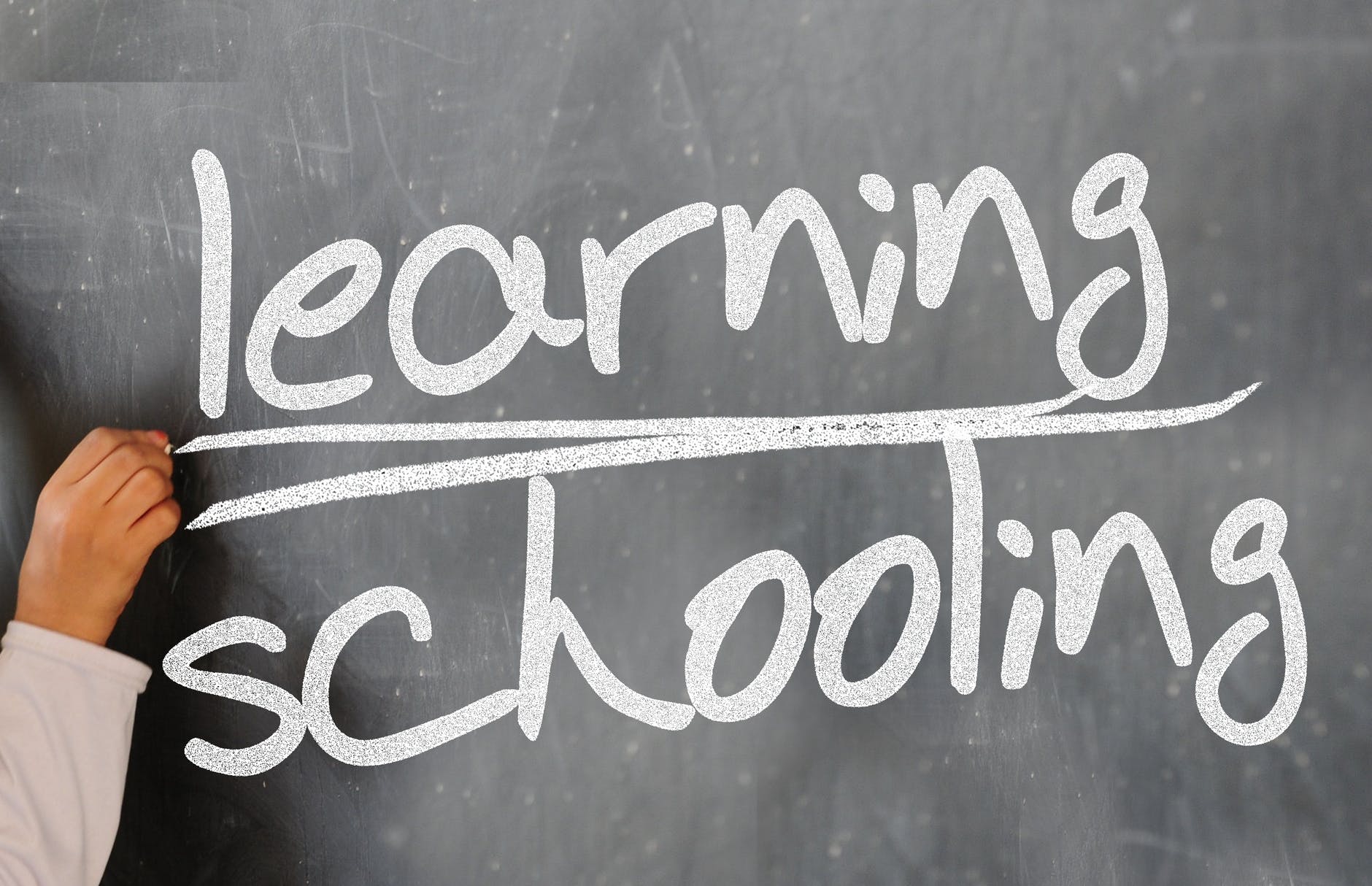
The above photo, by Pixabay, says one half of what I want you to hear.
The first half of what I am saying is “School is for learning.”
Peter F Drucker wrote in his book “Management” that organisations must focus on their goal. He uses the failure of the American schooling system as an example of an organisation losing its purpose. The American school system of the 1960s was used for social transformation instead of learning. Because of this loss of focus the American school system lagged the French school system.
The other half I want to say, others have said in various ways:
Learning in education must take priority. We have repeated history.
Social transformation is a slow process. Social transformation cannot be forced. Social transformation must be nurtured. Social transformation must be encouraged. Social transformation must be learnt. Social transformation must embed itself in society.
Let’s see if we can take a bit longer before we repeat history again. Let us learn.
Crystal Garden. Crystals in a glass jam-jar with a string hanging from a pencil over a blue-green liquid (mainly copper sulphate for those who want to know). Later Quartz crystals in the real garden. Eventually, molecular shapes on a computer screen in space filling, ball and stick and stick forms. An old scholar’s fascination with snow crystals. Metal crystals! All these, but the first foremost, lit the chemistry candle in me.
I have attempted to light a similar candle in my kids. They appreciated the sodium-phosphate-crystal-growth kit – the biggest crystal I have ever produced. They were the talk of the school when Edith (my wife) helped them produce the biggest borax crystals in class. My young ones have other loves and they live out their unique identities. Good for them.
My youngest was as fascinated by the molecular diagrams in the Rubber Bible (CRC Handbook of Chemistry and Physics). Looking at the diagrams again, re-awakened my desire to investigate these molecules with molecular modelling software. These models will form the basis of a book of shapes – but much later. My youngest pointed out that the one molecular shape resembles a mouse, then there was the human face, dog, flying balloon and many others. I don’t know whether this is a failed Rorschach test or looking at clouds with imagination. You decide.
I still wish to light the chemistry candle in other young ones. So, I have compiled an elementry (yes, I know a spelling mistake) book: Elementary Science: Alphabet, Numbers, and Shapes (Elementry Science Book 1) (now I got the spelling right). The book shows the alphabet using the elements. J, Q and W are not covered. Yes, tungsten does exist, but I do not want to confuse a child by making them believe that W is pronounced “T”. Counting using alkanes is easy enough to do and molecular shapes cover simple geometries.
So, what am I saying: “See if you can spark the love of your favourite subject in the young ones around you.”
Today the bulk of the South African 2018-matriculants received their final school report. I value education. Education is important.
Others are writing about the quality of the education the matriculants received. Others are questioning the real value one should attribute to the matriculation certificate.
Education, which must be revolutionized in the new world, will be revolutionized by the very agency that requires the revolution — the computer.
Schools will undoubtedly still exist, but a good schoolteacher can do no better than to inspire curiosity which an interested student can then satisfy at home at the console of his computer outlet.
There will be an opportunity finally for every youngster, and indeed, every person, to learn what he or she wants to learn. (sic) in his or her own time, at his or her own speed, in his or her own way.
Education will become fun because it will bubble up from within and not be forced in from without.
Asimov’s prediction has largely come true – for post school studies. Adults have access to a multitude of cheap or partially free life-long education. Kids can access this material as well and they surely spend a lot of time on YouTube.
That the education system (that I know of) is still as rigid as it was decades ago, saddens me. The education system largely enforces uniformity and often blocks curiosity; for the larger portion of learners.
I support Asimov’s vision of how education should have been by now. I support reading widely or deeply (depending on the child’s interest) even more.








 Green Octahedron Blogging
